


What Are Terrazzo Tiles?


Terrazzo has been around for centuries, but it’s seeing a strong comeback in both residential and commercial spaces. Clients usually come to us with a mix of curiosity and hesitation: Is terrazzo worth it? Is it too expensive? Will it hold up over time?
The answer depends on how you plan to use the space and how well the installation is handled.
What Exactly Are Terrazzo Floor Tiles?
Terrazzo tiles are made from chips of marble, quartz, granite, or glass set into a cement or epoxy base. Unlike poured-in-place terrazzo, tiles are pre-cast and then installed like traditional tiles.
That distinction matters. Tile terrazzo offers more flexibility for smaller projects and renovations, while still delivering the same signature look. The multi-colored aggregates give terrazzo its depth and character.

Where Terrazzo Tiles Work Best
From experience, terrazzo tiles perform exceptionally well in:
Commercial lobbies and retail spaces
Schools and healthcare environments
Kitchens, hallways, and entryways in homes
Bathrooms (with proper slip considerations)
They’re not just chosen for looks. Terrazzo is dense, durable, and handles heavy foot traffic better than many other flooring options. If you’re thinking long-term, this is a material that holds up.

Durability: What Clients Often Underestimate
Terrazzo is one of the most durable surfaces you can install. It resists wear, staining (when sealed properly), and impact better than ceramic or porcelain in many cases.
That said, durability isn’t just about the material, it’s about the installation.
Poor subfloor prep or rushed installation can lead to:
Lippage (uneven tile edges)
Cracking at weak points
Visible joint inconsistencies
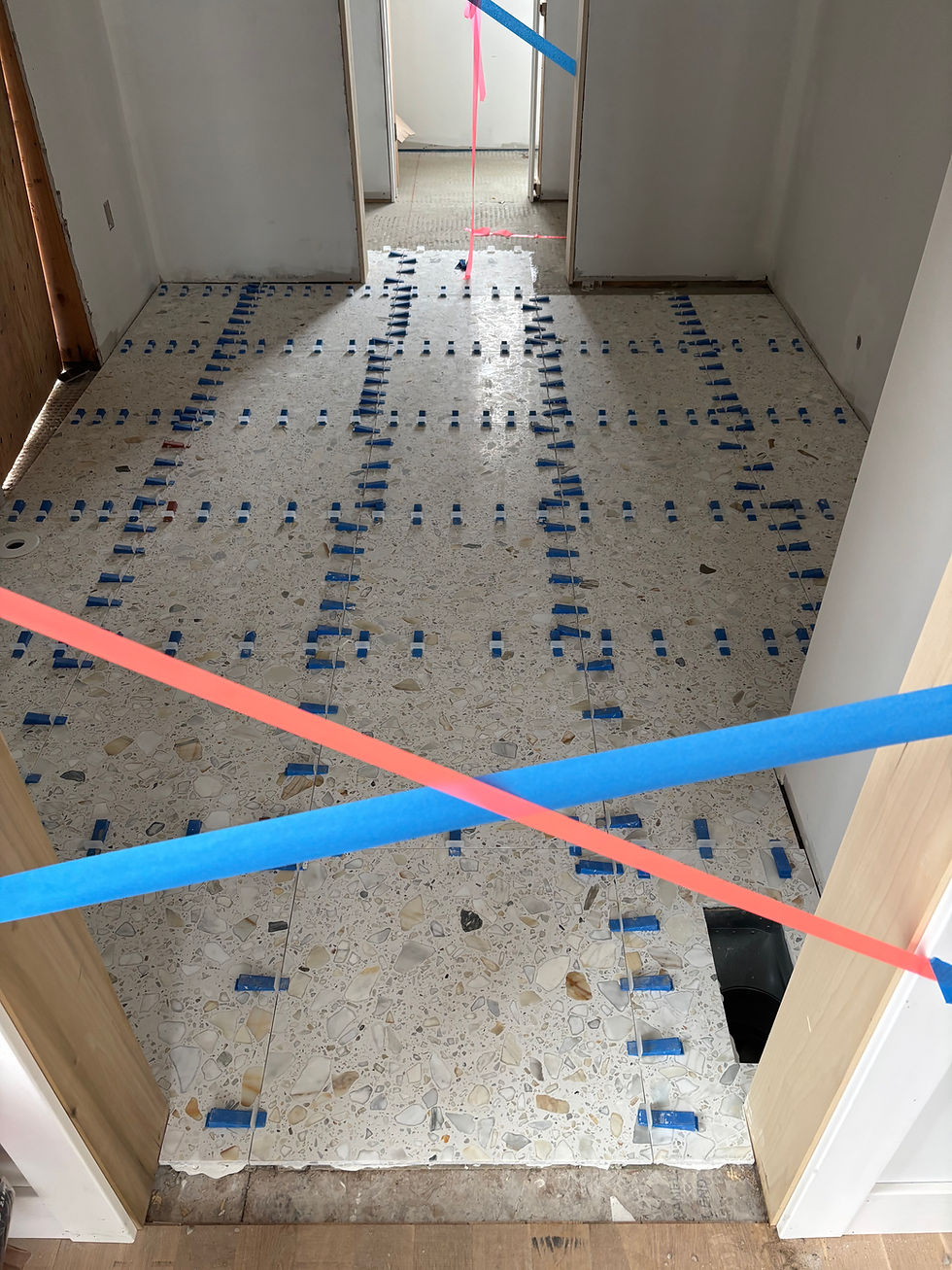
The image above shows tile spacers being used to control joint spacing. That’s a small detail, but it makes a big difference in the final appearance. Terrazzo doesn’t hide mistakes well, so precision matters.
Design Considerations Most People Miss
Terrazzo tiles look random, but good installations are anything but.
Here are a few things clients don’t always think about:
1. Layout PlanningTile placement affects the visual flow. Without a proper layout, you can end up with awkward cuts at walls or uneven transitions.
2. Grout ColorGrout lines are more visible with terrazzo than people expect. Choosing the wrong color can disrupt the entire look.
3. Tile VariationEach tile is slightly different. That’s part of the appeal but it needs to be balanced during installation so one area doesn’t look too heavy or too sparse.
4. Transitions to Other FlooringTerrazzo tile thickness can vary. Planning transitions to wood, LVT, or carpet ahead of time avoids trip hazards and awkward height differences.
Is Terrazzo Hard To Maintain?
Not really. With the right sealer and routine care:
Regular sweeping and damp mopping is enough
Avoid harsh acidic cleaners
Periodic resealing keeps it looking sharp
In commercial settings, we sometimes recommend a maintenance schedule upfront. It protects the investment and avoids premature wear patterns.
Common Mistakes to Avoid
Over the years, we’ve seen a few recurring issues:
Choosing terrazzo purely for looks without considering slip resistance in wet areas
Skipping professional installation to cut costs
Ignoring subfloor conditions, especially in older buildings
Not planning for expansion joints, which can lead to cracking over time
These aren’t small details- they’re the difference between a floor that lasts decades and one that needs repairs within a few years.
Terrazzo vs. Other Flooring Options
Clients often compare terrazzo to materials like porcelain tile, polished concrete, or natural stone.
Here’s a practical way to think about it:
Porcelain Tile: More budget-friendly, but less unique visually
Polished Concrete: Seamless look, but can crack and requires site conditions to be right
Natural Stone (Marble/Granite): Elegant, but more maintenance and less uniform durability
Terrazzo sits in a category of its own- high durability, highly customizable, and built for longevity.
Is Terrazzo Right for Your Project?
If you’re looking for a floor that balances durability, design, and long-term value, terrazzo tiles are a strong option. But they’re not a one-size-fits-all solution. The success of the project comes down to planning, material selection, and proper installation.
Every space is different. The way a floor performs in a busy commercial lobby is very different from how it functions in a residential kitchen or basement.
The experts at LaFace Flooring, LLC can help you with all your flooring needs. Contact us today to review and estimate your project.


Comments