


What Are Rubber Flooring Tiles?


When clients ask about rubber flooring tiles, the conversation usually starts with one simple question: Is rubber really a good flooring option for my space? The short answer is yes—for the right application. Like any flooring material, rubber has strengths, limitations, and specific use cases where it truly shines.
What Are Rubber Flooring Tiles?
Rubber flooring tiles are manufactured from natural or synthetic rubber and typically come in modular formats, most commonly square tiles. They’re widely used in gyms, playrooms, commercial facilities, healthcare settings, and increasingly in residential basements and utility spaces. The modular design allows for easier installation and replacement compared to rolled rubber flooring, which can be a big advantage in high-use environments.
Why Clients Choose Rubber Flooring
The biggest draw is durability. Rubber tiles are resilient under heavy foot traffic, equipment, and impact. They absorb shock well, which reduces fatigue and noise—two concerns we hear often from commercial clients and homeowners alike.
Rubber is also naturally slip-resistant, even when wet, making it a solid choice for areas where safety is a priority. In fitness spaces or commercial buildings, this can significantly reduce the risk of slips and falls. From a maintenance standpoint, rubber tiles are relatively low effort. Regular sweeping and damp mopping are usually sufficient, and there’s no need for refinishing or sealing like you’d see with wood or concrete.

Design and Aesthetic Considerations
One misconception is that rubber flooring is purely industrial or unattractive. While it’s true that rubber is often chosen for function first, today’s tiles come in a range of colors, textures, and thicknesses. That said, it’s still not the right fit for every design vision. Rubber doesn’t replicate the warmth of wood, the refinement of terrazzo, or the elegance of marble or porcelain. We often recommend rubber in spaces where performance matters more than visual impact—or where the flooring supports a larger design strategy rather than leading it.

Installation Matters More Than Most People Expect
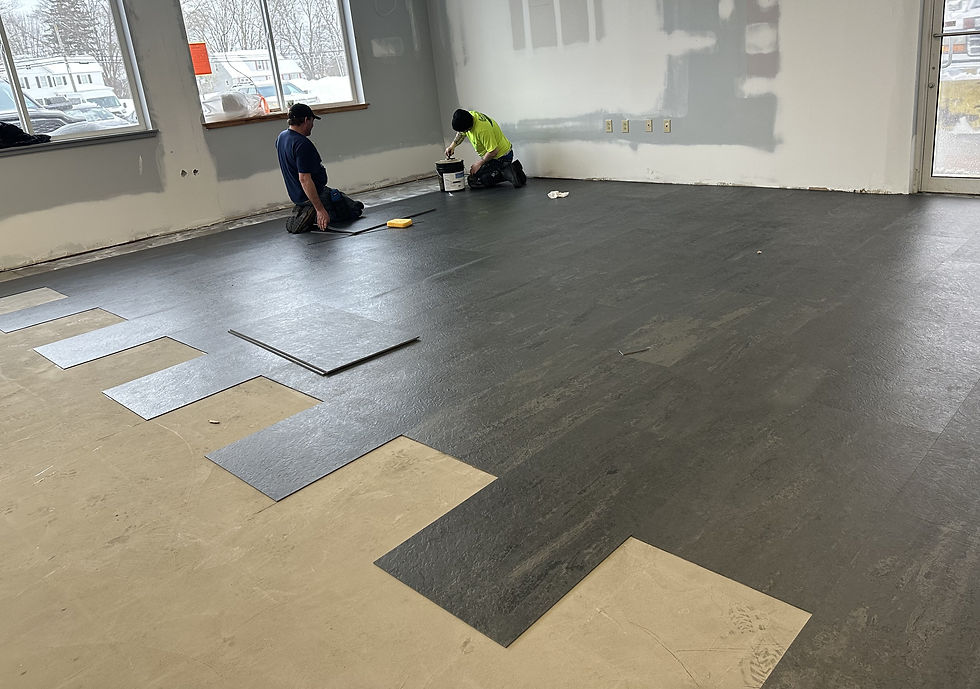
Rubber tiles are sometimes marketed as a DIY-friendly product, but improper installation is a common issue we see. Subfloor preparation is critical. Any unevenness telegraphs through the tile, and adhesive selection matters more than clients realize. In commercial settings especially, temperature changes, moisture levels, and traffic patterns all affect long-term performance. A professional installation ensures the tiles stay flat, aligned, and secure over time.

Common Mistakes to Avoid
One of the biggest mistakes is choosing rubber tiles without considering thickness. Thinner tiles may save upfront cost but often don’t hold up as well under heavy equipment or repeated impact. Another oversight is ignoring transitions. Rubber flooring is thicker than many other surfaces, and poorly planned transitions can become tripping hazards or wear points.
Clients also sometimes assume rubber is maintenance-free. While it’s low maintenance, it’s not no maintenance. Harsh cleaners and waxes can damage the surface and reduce slip resistance over time.
Is Rubber Flooring Right for Your Project?
Rubber flooring tiles are an excellent solution for gyms, play areas, commercial facilities, basements, and utility spaces where comfort, safety, and durability are priorities. They’re not always the best choice for formal living areas or design-driven spaces, but when used correctly, they perform exceptionally well.
If you’re considering rubber flooring—or weighing it against options like tile, LVT, concrete, or terrazzo—it helps to talk through the details with a professional who understands how these materials behave in real-world conditions.
The experts at LaFace Flooring, LLC can help you with all your flooring needs. Contact us today to review and estimate your project.


Comments